Filming Locations in Kenya
Savannah, volcanic canyons, glaciers, coral stone towns and a working capital city, all inside one permit framework and scouted by a Nairobi team that has filmed here since 2007.
Insignia Productions has been shooting across these landscapes since 2007. We are a Nairobi based film and video production company that has delivered work for global broadcasters, agencies, and brands, including 7 News Australia, Sesame Street, The New York Times, Google, Panasonic, and Kenya Airways. Below are the ten locations we return to most often, and what each one actually demands from a camera department.
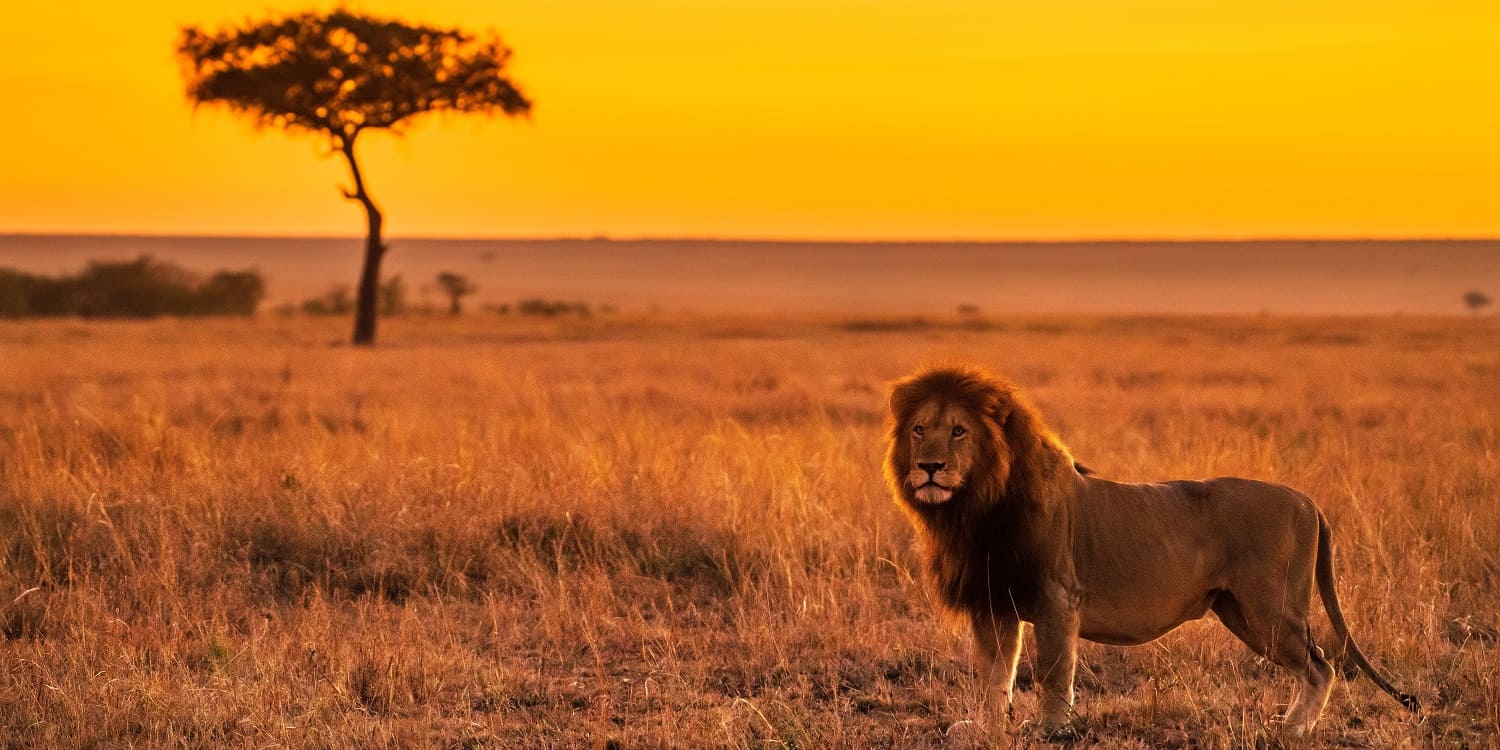


Kenya Filming Locations at a Glance
Ten locations we know in detail, from the savannah of the Maasai Mara to the ridge above Nairobi. Jump straight to the one your script needs, or compare all ten side by side.
- 01Maasai Mara National ReserveSavannah and the Great Migration
- 02Amboseli National ParkElephants under Kilimanjaro
- 03Hell's Gate National ParkRed canyons you can shoot on foot
- 04Samburu and Shaba National ReservesArid north, rare species
- 05The Great Rift Valley and its LakesSoda lakes and escarpments
- 06Mount KenyaForest to glacier in one location
- 07Lamu Island700 year old Swahili town
- 08NairobiCity, suburbs and a park with a skyline
- 09Diani Beach and MombasaReef lagoon and an old port
- 10Ngong HillsRidge above the Rift Valley
Why Film in Kenya
Kenya is one of the few countries on earth where a crew can shoot open savannah at sunrise, volcanic canyon at midday, and 700 year old Swahili stone architecture the following week, all inside one production window and one permit framework. The country offers roughly 12 hours of consistent daylight year round, an equatorial sun that gives clean, hard key light and a fast falloff into golden hour, and altitude changes from sea level to over 5,000 metres within a few hundred kilometres. For a director of photography, that means enormous variety in colour temperature, atmosphere, and depth without repeatedly rebuilding the camera package.
About 12 Hours of Daylight All Year
The equator gives a consistent day length, clean hard key light and a fast falloff into golden hour, so call sheets barely change from one season to the next.
Sea Level to Over 5,000 Metres
From the Indian Ocean coast to Batian, the 5,199 metre summit of Mount Kenya, all within a few hundred kilometres.
Two Dry Seasons
Late June to October and January to February give the most reliable weather for exterior work.
One Production Hub
Nairobi holds the crew, camera and lighting rental, post facilities and permit offices, with most locations reachable by road or light aircraft.
Local Film Agent Required
Foreign productions must work through an accredited Kenyan film agent. Insignia Productions is one.
Licensed Drone Operations
Aerial work needs a licensed operator and a permit from the Kenya Civil Aviation Authority, which we process for clients.
Some of the Kenyan Locations We Shoot Most Often
Each location includes a short location report with the look, travel time from Nairobi, best season, access rules, the kit it demands and the productions it suits best. Travel times are approximate and change with season and road conditions.
Narok County, south west Kenya
1. Maasai Mara National Reserve
Open savannah and the Great Migration, shot on long glass from the vehicle.
The Mara is the reference image of African savannah: 1,510 square kilometres of open grassland, riverine forest, and acacia scatter, contiguous with the Serengeti. For camera teams it is a long lens location. Most usable coverage is shot on 400mm to 800mm glass from a beanbag or a low mount on a modified 4x4, because vehicles cannot leave the tracks without written authorisation.
The July to October wildebeest crossings on the Mara River are the single most demanding sequence in East African wildlife filming, and they reward high frame rate capture at 120fps or above to hold detail in the chaos of the water. Long form natural history has been shot here for decades, including the BBC series that made big cat behaviour a genre of its own, and Out of Africa built much of its savannah language on this terrain.
We handle vehicle rigging, tracking shots, and crew logistics through our fixer services in Kenya. Official reserve information is maintained by UNESCO's tentative list entry for the Maasai Mara Game Reserve.
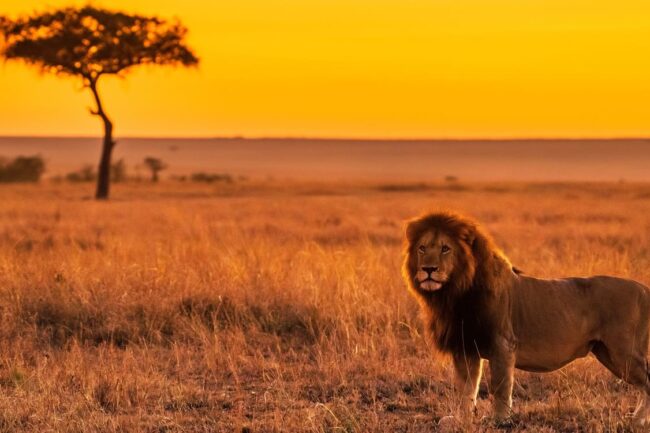
- LookOpen grassland, riverine forest, acacia scatter
- From Nairobi5 to 6 hours by road, or about 45 minutes by light aircraft
- Best timeJuly to October for the river crossings. Wildlife all year
- AccessVehicles stay on tracks unless you hold written authorisation
- Kit to plan400mm to 800mm lenses, beanbags, low vehicle mounts, 120fps capture
- Managed byNarok County Government
- Best forWildlife documentary, natural history, premium brand films
Kajiado County, southern Kenya on the Tanzanian border
2. Amboseli National Park
Elephants with Kilimanjaro on the horizon, in two short daily light windows.
Amboseli exists on screen for one reason: Kilimanjaro. The mountain sits across the Tanzanian border and dominates the southern horizon, giving you a natural backdrop with a scale no set can replicate. The catch is atmospheric haze. The peak is typically clear only between roughly 6:00 and 8:30 in the morning and again in the last hour before sunset, which compresses your shooting day into two hard windows.
Plan for a polarising filter to cut haze and pull the snowline back, and expect to expose for a very wide dynamic range between bright cloud and dark elephant hide. The dry lake bed produces alkaline dust that will destroy an unsealed camera body, so sealed housings, rain covers, and a disciplined lens change protocol are not optional.
This is a natural history and brand film location above all, built around some of the most studied elephant families in the world. See our documentary production work for reference. Park details are published by the Kenya Wildlife Service.

- LookDry lake bed, swamps, Kilimanjaro backdrop
- From Nairobi4 to 5 hours by road, or about 45 minutes by air
- Light windowAbout 6:00 to 8:30 and the last hour before sunset
- AccessGame vehicles on park roads
- Kit to planPolarising filters, sealed housings, rain covers
- Managed byKenya Wildlife Service
- Best forNatural history, documentary and brand films
Nakuru County, next to Lake Naivasha
3. Hell's Gate National Park
A red walled canyon and geothermal steam, with crew free to work on foot.
Hell's Gate is the closest thing Kenya has to a practical exterior set. Red walled gorges, volcanic plugs rising vertically out of the plain, geothermal steam venting straight from the ground, and almost no large predators, which means it is one of only two Kenyan parks where crew can work on foot without an armed escort. That single fact cuts your setup time dramatically and makes handheld, gimbal, and Steadicam work genuinely viable in a way it is not inside the big game parks.
The Ol Njorowa Gorge gives you high contrast, narrow, sculpted walls that read as alien or prehistoric on camera, and steam plumes that work as free in camera atmosphere. Disney's art department visited the park while developing the visual world of The Lion King, and the landscape has served as reference and location for adventure features since.
Ideal for TV commercial production needing scale without a build. Managed by the Kenya Wildlife Service.
- LookRed gorges, volcanic plugs, geothermal steam
- From NairobiAbout 2 hours by road
- Best timeAll year. Avoid the gorge in heavy rain
- AccessOn foot, no armed escort needed
- Kit to planHandheld, gimbal and Steadicam rigs
- Managed byKenya Wildlife Service
- Best forTV commercials, adventure, sci fi and prehistoric looks
Samburu and Isiolo Counties, northern Kenya
4. Samburu and Shaba National Reserves
Red earth, doum palms and species you will not find in the Mara.
North of the equator the palette changes completely. Samburu and Shaba are semi arid: ochre soil, doum palm groves, the brown Ewaso Ng'iro river cutting a green line through red rock. The colour separation between the earth tones and the sky is extreme, which makes this a natural fit for anamorphic lenses and a warm, filmic grade.
Species here are found almost nowhere else in Kenya, including Grevy's zebra and reticulated giraffe, so wildlife units get imagery that does not look like standard Mara coverage. This is where George and Joy Adamson raised Elsa the lioness, the story behind Born Free, and the region has hosted conservation and science filming ever since.
Heat is the operational risk. Sensors throttle, batteries drain faster, and you will need shaded staging and a cooled data tent for your DIT, the technician who backs up and checks footage on set. We supply full camera and grip packages through equipment hire. Save the Elephants runs its principal research station inside the reserve.

- LookOchre soil, doum palms, Ewaso Ng'iro river
- From Nairobi5 to 6 hours by road, or about 1.5 hours by light aircraft
- Signature speciesGrevy's zebra, reticulated giraffe, Beisa oryx, gerenuk, Somali ostrich
- Main riskHeat. Plan shade, spare batteries and a cooled DIT tent
- Kit to planAnamorphic lenses, cooling for data and sensors
- Managed bySamburu County (Samburu) and Isiolo County (Shaba)
- Best forWildlife documentary with a fresh look, warm toned brand and fashion work
Nakuru and Baringo Counties, central Rift Valley
5. The Great Rift Valley and its Lakes
Four lakes, four different looks, and escarpments made for aerial work.
Naivasha, Nakuru, Bogoria, and Elementaita form a chain of shallow soda and freshwater lakes along the valley floor, each with a distinct look. Bogoria delivers geysers, hot springs, and dense flamingo flocks against steam. Nakuru gives you a fenced, controlled environment with rhino and a clean escarpment backdrop. Naivasha is freshwater, fringed with fever trees and yellow acacia, roughly 90 minutes from Nairobi, which makes it the most production friendly of the four for a one day commercial shoot.
The valley walls give aerial units a genuine tectonic scale, and drone work here is exceptional in the first and last hour of light when the escarpment rakes into long shadow. Note that all drone operations in Kenya require a licensed operator and a permit from the civil aviation authority, which we process for clients.
Three of these lakes are inscribed by UNESCO as the Kenya Lake System in the Great Rift Valley. See more of our range across our projects.

- LookSoda and freshwater lakes, flamingos, geysers, escarpment
- From NairobiNaivasha about 90 minutes, Nakuru about 3 hours, Bogoria about 5 hours
- Best lightFirst and last hour, when the escarpment throws long shadows
- DronesLicensed operator and civil aviation permit required
- UNESCO lakesNakuru, Bogoria and Elementaita
- Managed byKenya Wildlife Service (Nakuru) and Baringo County (Bogoria)
- Best forAerials, flamingo wildlife, one day commercial shoots at Naivasha
Not sure which location fits your script?
Send us your treatment or a rough brief. We match each scene to a real Kenyan location and come back with travel days, a permit timeline and a realistic shooting schedule.
Central Kenya, on the equator
6. Mount Kenya
Farmland, montane forest, moorland and glacier in a single location.
Mount Kenya is Africa's second highest peak and gives you four distinct vertical zones in a single location: farmland, dense montane forest, otherworldly giant lobelia moorland, and glaciated rock at the summit ridge. Very few places let a crew move from equatorial jungle to snow in one day of travel.
The trade off is logistics. Above roughly 3,000 metres you are moving gear by porter, batteries lose capacity fast in the cold, and altitude affects crew performance, so schedule acclimatisation days into the call sheet rather than treating it as a standard remote shoot.
Light is a genuine advantage here. Thin air at altitude produces very high contrast and a deep, saturated sky that needs almost no help in the grade. Expedition documentaries, endurance brand films, and conservation programming all use this mountain. The park is a UNESCO World Heritage site.

- LookFarmland, montane forest, lobelia moorland, glacier
- From NairobiAbout 3 hours by road to the park gates
- Summit5,199 metres at Batian, Africa's second highest peak
- AccessGear moves by porter above about 3,000 metres
- Kit to planExtra batteries for the cold, acclimatisation days
- Managed byKenya Wildlife Service and Kenya Forest Service
- Best forExpedition documentaries, endurance brand films, conservation
Lamu County, north coast
7. Lamu Island
A living 700 year old Swahili town with no cars and no set dressing needed.
Lamu is the oldest and best preserved Swahili settlement in East Africa, continuously inhabited for over 700 years, built in coral stone and mangrove timber, with carved wooden doors, inner courtyards, and streets too narrow for cars. There are effectively no vehicles on the island, which means your entire package moves by donkey and boat, and that reality has to be built into your schedule from day one.
What you get in return is a period accurate location with no set dressing required and no modern signage to paint out in post. The narrow alleys create strong shafts of directional light through the day, and the light bouncing off coral walls gives faces a warm, soft fill that is very difficult to replicate with units.
Practical advice: work with compact bodies and fast primes, keep the footprint small, and negotiate access respectfully through local elders. Lamu Old Town is inscribed by UNESCO. Our creative agency in Kenya team handles concept and cultural direction for work of this kind.
- LookCoral stone, carved doors, courtyards, narrow alleys
- From NairobiAbout 1.5 hours by air to Manda, then a short boat ride
- Best timeOutside the long rains, roughly April to June
- AccessNo cars. Gear moves by donkey and boat
- Kit to planCompact bodies, fast primes, small footprint
- Heritage statusLamu Old Town, UNESCO World Heritage
- Best forPeriod drama, fashion, travel, cultural stories with creative direction
Nairobi, capital city and production base
8. Nairobi
Glass towers, colonial era Karen and rhino in front of a skyline.
Nairobi is the production capital of East Africa and a versatile urban location in its own right. The central business district gives you glass towers and dense traffic. Kibera offers one of the most photographed informal settlements in the world, a location that demands genuine community liaison and an ethical approach rather than a drive by shoot. Karen provides colonial era stone houses, manicured gardens, and quiet suburban streets that double convincingly for several periods.
And Nairobi National Park is the only national park bordering a capital city anywhere, giving you the now iconic frame of rhino and giraffe against a skyline. The Constant Gardener built its Kenyan act in Kibera, and Netflix's Sense8 used the city as a principal location.
Nairobi is also where your crew, gear, post facilities, and permits actually live, which is why we base our operation here. Meet our team. Permits and licensing are administered through the Kenya Film Commission.

- LookBusiness district, Kibera, Karen villas, national park
- From NairobiYou are here. Most setups are under an hour apart
- On screenThe Constant Gardener, Sense8
- AccessCity permits, plus community liaison in Kibera
- Kit to planFull rental, lighting and post available locally
- Permits viaKenya Film Commission, county and KWS for the park
- Best forUrban commercials, drama, period doubling, TV series
Kwale and Mombasa Counties, south coast
9. Diani Beach and Mombasa
White coral sand, a reef protected lagoon and a 16th century fort.
The Kenyan coast gives you the tropical register: white coral sand, a shallow turquoise lagoon protected by an offshore reef, and coconut palms. Diani is the cleanest, most consistent beach location in the country and the reef makes water work far safer for underwater units and talent. Mombasa adds texture, a working Indian Ocean port, an Old Town of Swahili, Arab, and Indian architecture, and Fort Jesus, the 16th century Portuguese fortification that anchors the harbour.
The technical challenge on the coast is exposure control and salt. You are dealing with a very bright, highly reflective surface, so plan on strong ND filtration to keep your aperture open and hold shallow depth of field, plus negative fill (black flags used to subtract light) to stop faces going flat under an overhead sun. Salt air corrodes contacts and mounts, so budget daily cleaning time.
Fort Jesus and the coastal heritage sites are managed by the National Museums of Kenya.

- LookCoral sand, turquoise lagoon, palms, Old Town, Fort Jesus
- From NairobiAbout 1 hour by air, or around 5 to 6 hours by train
- Best timeOutside the long rains, roughly April to June
- Water workReef protected lagoon, safer for underwater units
- Kit to planStrong ND filters, negative fill, daily salt cleaning
- HeritageNational Museums of Kenya (Fort Jesus)
- Best forTravel, beach and beverage commercials, underwater, period work
Kajiado County, about 25 km southwest of Nairobi
10. Ngong Hills
Two completely different backdrops on one ridge, close to the city.
The Ngong Hills are a ridge of seven knuckle shaped peaks about 25 kilometres southwest of Nairobi, the eroded remains of an old volcano. From the eastern slopes you look down over Nairobi National Park and the city, and from the western slopes the land drops more than a thousand metres straight into the Rift Valley. That single ridge gives a director two completely different backdrops within a few minutes of walking.
The grass is green and rolling, the wind turbines on the ridgeline give a contemporary graphic element if you want it or an easy angle to avoid if you do not, and the proximity to Nairobi makes it the most efficient establishing location in the country. You can be on the ridge at first light and back at a Nairobi stage before lunch.
The four peaks appear behind Karen Blixen's house throughout Out of Africa, and Denys Finch Hatton's grave sits on the eastern slope. Managed by the Kenya Forest Service.

- LookGreen rolling ridge, Rift Valley drop, city views
- From NairobiAbout 1 hour by road
- Best lightFirst light, then back to Nairobi before lunch
- On screenOut of Africa
- Kit to planDrone permit for aerials, wind protection for sound
- Managed byKenya Forest Service
- Best forEstablishing shots, sunrise, quick commercial days
Kenya Filming Locations Compared
A quick reference for producers building a schedule. Travel times are approximate and depend on season, road conditions and aircraft availability.
| Location | Signature look | From Nairobi | Best for | Main challenge |
|---|---|---|---|---|
| Maasai Mara | Open savannah, Great Migration | 5 to 6 h road, 45 min flight | Wildlife documentary, brand films | Vehicles must stay on tracks |
| Amboseli | Elephants, Kilimanjaro backdrop | 4 to 5 h road, 45 min flight | Natural history, brand films | Haze and alkaline dust |
| Hell's Gate | Red canyon, steam vents | About 2 h road | TV commercials, adventure | Flash flood risk in the gorge |
| Samburu and Shaba | Semi arid, red earth, doum palms | 5 to 6 h road, 1.5 h flight | Wildlife with a fresh look, fashion | Extreme heat on kit and crew |
| Rift Valley lakes | Soda lakes, flamingos, escarpments | 1.5 to 5 h road | Aerials, one day commercials | Drone permits needed early |
| Mount Kenya | Forest, moorland, glacier | About 3 h road to the gates | Expedition docs, endurance brands | Altitude, cold, porter logistics |
| Lamu Island | Swahili stone town, no cars | About 1.5 h flight plus boat | Period drama, fashion, travel | Donkey and boat logistics |
| Nairobi | Towers, Kibera, Karen, city park | Base location | Urban commercials, drama | Traffic and community liaison |
| Diani and Mombasa | Beach, reef lagoon, old port | 1 h flight or 5 to 6 h train | Beach commercials, underwater | Glare and salt corrosion |
| Ngong Hills | Green ridge over the Rift | About 1 h road | Establishing shots, quick shoots | Wind on the ridgeline |
Best Time to Film in Kenya
Kenya has two dry seasons and two rainy seasons. Patterns shift by region and by year, so we check forecasts and park conditions against your dates before we lock a schedule.
- Jan
- Feb
- Mar
- Apr
- May
- Jun
- Jul
- Aug
- Sep
- Oct
- Nov
- Dec
- Dry season
- Long rains
- Short rains
Short Dry Season
January to February
Clear skies and good wildlife viewing. Hot on the coast and in the north.
Long Rains
March to May
Green landscapes and dramatic skies, but muddy tracks and some remote camps close. Plan weather cover days.
Long Dry Season
Late June to October
The most reliable weather, plus the Maasai Mara river crossings from July to October. Busiest period, so book crew and lodges early.
Short Rains
November to mid December
Short afternoon showers, lush scenery and fewer visitors in the parks.
Filming Permits in Kenya: What Foreign Crews Need
Every foreign production in Kenya works through an accredited local film agent. Insignia prepares and files each of these for you through our fixer services in Kenya. The exact list depends on your locations, crew and kit.
- Accredited local film agent. Mandatory for every foreign production. Insignia acts as your agent.
- Filming licence from the Kenya Film Classification Board, needed for every shoot in Kenya.
- Wildlife filming fees with the Kenya Wildlife Service, or with the county for county reserves such as the Maasai Mara.
- County location permits for public spaces and county land.
- Special passes for foreign crew through the Directorate of Immigration Services.
- Drone authorisation from the Kenya Civil Aviation Authority, with a licensed operator.
- Temporary equipment import through Kenya Revenue Authority customs.
- Heritage site access through the National Museums of Kenya for sites such as Fort Jesus and Gede.
More Filming Locations in Kenya
The ten above are where we shoot most often, not the full list. These locations are also on our map, and our fixer team can scout any of them against your script.
Lake Turkana
Turkana and Marsabit Counties, far north
The Jade Sea is the largest permanent desert lake in the world, framed by volcanic islands and the Koobi Fora fossil sites. Its national parks are a UNESCO World Heritage site. Best reached by charter flight.
Best for: Epic desert landscapes, science and history documentaries
Tsavo East and Tsavo West
South east Kenya, between Nairobi and the coast
Together they form the largest protected area in Kenya, with red dust elephants, black lava flows and the clear pools of Mzima Springs. Easy to combine with a coast shoot.
Best for: Big wildlife, road movies, trips that end on the coast
Laikipia and Ol Pejeta
Laikipia County, north of Mount Kenya
Private and community conservancies often allow off road driving, walking and night work that national parks restrict, always with permission. Ol Pejeta is the largest black rhino sanctuary in East Africa.
Best for: Wildlife with flexible access, lodge and brand shoots
Chyulu Hills
Between Amboseli and Tsavo West
Young volcanic hills covered in green grass, with lava fields, Leviathan Cave (one of the longest lava tubes in the world) and Kilimanjaro in frame on clear mornings.
Best for: Lush landscapes, caves, aerial work
Lake Magadi
Kajiado County, about 2 hours from Nairobi
The southernmost Rift Valley lake in Kenya, a soda lake crusted in white and pink, with flamingos, extreme heat and flat horizons that read almost like another planet from the air.
Best for: Abstract aerials, fashion, sci fi textures
Aberdare Range
Nyeri and Nyandarua Counties, central highlands
High moorland, bamboo forest, mist and some of the tallest waterfalls in Kenya. Treetops, the lodge where Princess Elizabeth became Queen in 1952, sits in the Aberdares.
Best for: Misty forest, waterfalls, heritage stories
Mount Longonot
Nakuru County, above Lake Naivasha
A dormant volcano with a walkable crater rim and a forested crater floor, around 90 minutes from Nairobi and easy to pair with Hell's Gate on the same trip.
Best for: Aerials, adventure and endurance content
Kakamega Forest
Kakamega County, western Kenya
The only tropical rainforest in Kenya and the eastern edge of the Guineo Congolian forest belt, with dense canopy, primates and a huge bird list.
Best for: Jungle scenes, natural history
Kericho tea estates
Kericho County, western highlands
Rolling tea plantations with strong geometric rows, pickers at work and misty mornings. Kenya is one of the largest black tea exporters in the world.
Best for: Agriculture, food and beverage commercials, corporate films
Iten and the Kerio Valley
Elgeyo Marakwet County, western Kenya
The high altitude training town known as the Home of Champions, on the rim of the Kerio Valley escarpment. Elite runners train on red dirt roads at dawn.
Best for: Sports and endurance brand films
Watamu, Malindi and Gede
Kilifi County, north coast
Marine parks, the Mida Creek mangroves and the Gede Ruins, a Swahili town abandoned in the 17th century and slowly taken back by the forest.
Best for: Beach, underwater, period and mystery
Chalbi Desert
Marsabit County, northern Kenya
The only true desert in Kenya: salt flats, dust storms, mirages and oases around North Horr. Remote and demanding, with long road or charter access.
Best for: Desert and survival stories, extreme landscapes
Looking for a look that is not on this page? Tell us what the scene needs and we will send location options with photos.
Our Experience: What We Actually Bring to Set
Insignia Productions has operated as a full service production company out of Nairobi since 2007, working with clients across the USA, Europe, and East Africa. That means we do not just point you at locations. We run the production.
Permits and Logistics
On the logistics side, we are an accredited local film agent, which is a legal requirement for any foreign crew shooting in Kenya. We process filming licences with the classification board, wildlife filming fees with the Kenya Wildlife Service, county level location permits, special passes for foreign crew through immigration, drone authorisations, and temporary equipment importation through customs. Getting this wrong costs days. Getting it right is invisible, which is the point.
Camera, Lighting and Grip
On the technical side we carry current cinema camera packages, prime and zoom sets including long glass for wildlife work, gimbal and Steadicam systems for stabilised movement, gyro stabilised aerial mounts (camera heads that cancel out helicopter and vehicle vibration so long lens shots stay usable), HMI and LED lighting, generators sized for remote locations, and full grip. We build for the terrain, not from a standard list. A Samburu heat schedule and a Mount Kenya altitude schedule are different problems and get different kit. See our equipment hire options.
Kenyan Crew and In House Post
On crew, we field Kenyan DoPs, first assistant camera, gaffers, key grips, sound recordists, production designers, and drone pilots who have worked these locations repeatedly and know where the light falls at what hour. We run in house post, from data management on set through offline edit, colour grade, graphics, and finishing. Meet our team.
Credits
Our credits span documentaries and factual for international broadcasters, TV commercials for regional and global brands, and award winning TV shows for Netflix and Showmax. You can see the full body of work in our projects.
Frequently Asked Questions About Filming in Kenya
Do I need a permit to film in Kenya?
Yes. Foreign productions need a filming licence and must work through an accredited local film agent. Depending on the shoot you may also need wildlife filming fees, county location permits, special passes for foreign crew, drone authorisation from the Kenya Civil Aviation Authority and a temporary import process for equipment. Insignia Productions handles all of these as your local agent. Read more about our fixer services in Kenya.
What is the best time of year to film in Kenya?
The two dry seasons, late June to October and January to February, give the most reliable weather. July to October is peak season for the Maasai Mara river crossings. The long rains from March to May bring green landscapes and dramatic skies but also muddy tracks, so build weather cover days into the schedule.
Can I fly a drone to film in Kenya?
Yes, with a licensed operator and a permit from the Kenya Civil Aviation Authority. Parks and reserves can add their own rules. Insignia Productions supplies licensed drone pilots and processes the authorisation for clients.
Which filming locations are closest to Nairobi?
Nairobi National Park borders the city, the Ngong Hills are about 25 kilometres southwest, and Lake Naivasha, Hell's Gate and Mount Longonot are roughly 90 minutes to 2 hours away by road. All of them work as one day shoots from a Nairobi base.
Where can a film crew work on foot in Kenya?
Hell's Gate National Park is one of only two Kenyan parks where crew can work on foot without an armed escort, which makes handheld, gimbal and Steadicam work practical. Some private conservancies in Laikipia also allow guided walking with permission.
Which famous films and series were shot in Kenya?
Out of Africa used the Maasai Mara savannah and the Ngong Hills, The Constant Gardener built its Kenyan act in Kibera, Netflix's Sense8 used Nairobi as a principal location, and BBC natural history series have filmed big cat behaviour in the Mara for decades.
Does a foreign crew need a local production company to film in Kenya?
Yes. Kenyan rules require foreign crews to work through an accredited local film agent. Insignia Productions is an accredited local film agent based in Nairobi and has worked with international broadcasters, agencies and brands since 2007. Contact us to scope your shoot.
Ready to Shoot in Kenya?
Kenya is not a difficult country to film in. It is a country that punishes crews who arrive without local knowledge and rewards the ones who plan properly. The permits are workable, the infrastructure is real, the crew depth is genuine, and the locations are unrepeatable.
Whether you need a full production from concept to delivery, a Kenyan unit for a project already in motion, or a fixer team to unlock permits, locations, and logistics, we can scope it against your script, your schedule, and your budget.
Talk to us about your project. Send us your treatment or a rough brief and we will come back with a location plan, a permit timeline, and a realistic shooting schedule.
Contact us today to discuss your specific project requirements in depth, or call or WhatsApp +254 701 665 788.